Dubai Intercontinental Cup U13 brings 32 teams for four days of elite youth football
Real Madrid and Bayern Munich headline a 32-team field as the ninth Dubai Intercontinental Cup for Under-13 Football begins on Thursday. The four-day event runs from February 12 to 15 with support from the Dubai Sports Council. Organisers call it a “mini World Cup” for academy sides. The format features eight groups and a record mix of international and Emirati teams. Arsenal, Chelsea, AC Milan, Ajax and Flamengo join leading UAE clubs.
Ambition on display—and why it matters now
Dubai wants to cement its status as a global hub for youth development. The tournament sits within the emirate’s long-term sports strategy, launched in November, that prioritises pathways from grassroots to elite. Khalfan Belhoul, Vice Chairman of the Dubai Sports Council, framed the Cup as a practical test bed for assessing Emirati talent against top academies. The goal is clear: expose young players to real competition, measure progress, and adjust training with evidence.
Big names on the touchline, clear messages from the stage
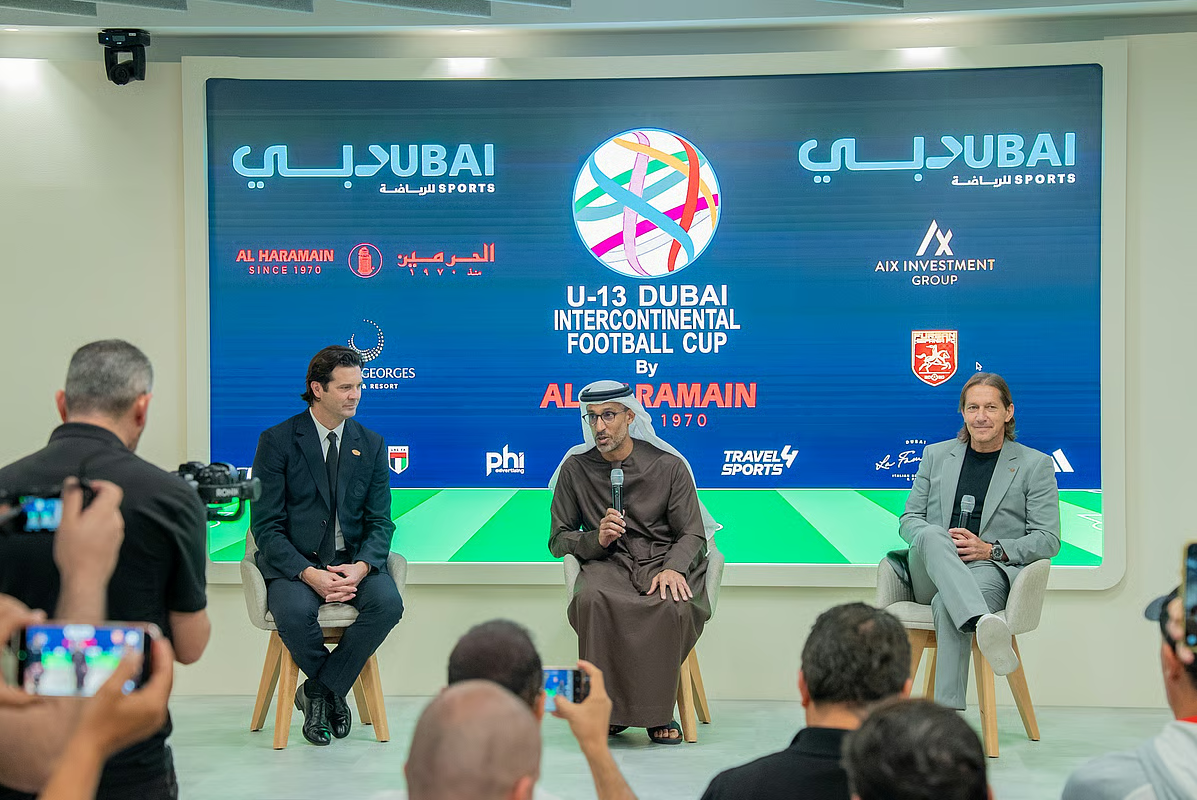
At a press conference in Emirates Towers, Belhoul appeared with former Spain international Michel Salgado and Santiago Solari, Real Madrid’s sporting director, in the presence of Saeed Hareb, Secretary General of the Dubai Sports Council. Salgado praised the Council’s “unlimited support” and said the event offers life lessons beyond football. Solari called the U13 age a critical window for building tactical awareness and football intelligence. A workshop followed on talent ID, selection criteria, and sustainable development routes—signalling that the Cup is also a classroom for coaches.
The field at a glance
This year’s expanded format features eight groups of four. European and South American giants anchor several pools, with UAE clubs set for high-level tests.
- Group A: Ajax, Al Nasr (UAE), CSKA Sofia, Dribbles SC.
- Group B: Celta Vigo, Iris Sports, Levski Sofia, Fursan Hispania (B).
- Group C: Flamengo, Inglesia FC, Mondial FA, Levante Azzurro (Italy).
- Group D: Bayern Munich, Riga FC (Latvia), Elite SS, Shabab Al Ahli Dubai.
- Group E: Chelsea, Lombardero (Italy), VV Baronie (Netherlands), Al Wasl (UAE).
- Group F: Real Madrid, Rodina Moscow, Al Wahda, Dubai Football Talents Center (U12 selection backed by Dubai Sports Council).
- Group G: AC Milan, United FC, Universitatea Craiova (Romania), Sharjah.
- Group H: Racing Club (Argentina), Fursan Hispania (Spain), Ajman, Ultimate Integral FC.
A pathway focus: structure over hype
The Council has stressed structured youth pathways and data-driven reviews. The Cup supports that push. Matchups against elite academies offer a live benchmark. Coaches can compare decision-making, technique, and physical profiles under pressure. The approach reduces guesswork: feedback loops form quickly, and plans can shift within weeks, not seasons.
What to watch over four days
Group balance will test UAE sides early. Ajax and Flamengo bring high-tempo pressing and quick combinations. Real Madrid and Bayern squads often control space with compact blocks and fast transitions. English entrants Arsenal and Chelsea carry depth across lines. For local clubs, small details will matter: defensive spacing, set-piece routines, and recovery runs. Tournament density—four days—will also reward squads that rotate smartly and keep intensity high.
Beyond the pitch: building a system around talent
Regular case discussions, coach education, and shared scouting standards now accompany the Cup. The aim is consistency. If clubs adopt common metrics and language, players move through the pathway with less friction. Parents also gain clarity on next steps, from training loads to academic balance.
Dubai’s ninth Intercontinental Cup U13 blends competition and curriculum. With 32 teams, big-name academies, and a clear development lens, the event serves both result and roadmap—one weekend, many data points for the season ahead.