
F1 2026 vs F2: Drivers See F2 Feel, FIA Insists on F1 Speed
Lando Norris has a clear test in mind. “When we get to a street track or bumpy, slower circuits, that’s a question we haven’t answered yet. Bahrain will answer some of it,” he said. The debate is hot: do the 2026 Formula 1 cars feel closer to Formula 2?
What actually changed for 2026
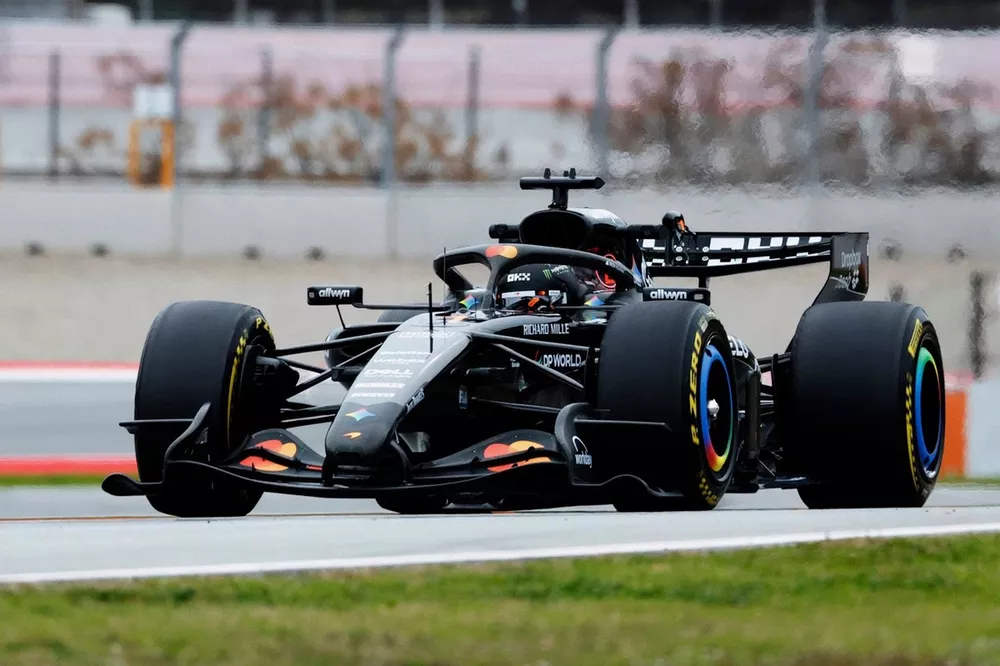
The 2026 F1 package brings narrower, lighter cars with less downforce. The power unit is new in balance: roughly half of the propulsion comes from the electric MGU-K. Active aero enters the rules to trim drag on straights and add grip in corners. In short, drivers manage more energy and a more agile chassis, with fewer glued-to-the-road sensations.
F1 2026 vs F2: the driver view
Comparisons keep surfacing. Jak Crawford said after simulator runs in late 2025 that the driving style felt “quite similar to F2.” Isack Hadjar agreed on the performance feel. Audi’s Gabriel Bortoleto sampled both 2025 and 2026 specs in testing. “They are very different,” he said. He still sensed echoes of F2: “much slower than the old F1,” with a big electric shove off corners. The takeaway from the cockpit is simple. Less aero and new energy maps change how you brake, rotate, and deploy. It can remind drivers of F2 rhythms.
The FIA’s benchmark for speed
Nikolas Tombazis, who leads single-seater matters at the FIA, pushed back on any claim that 2026 pace is “like F2.” The target is slightly slower laps than 2024–2025 at the start of the cycle—about one to two seconds, depending on track and conditions. That leaves room for natural development. The intent is clear: F1 stays well above F2 on outright performance, while improving racing and efficiency.
Early lap-time signals
Unofficial private-test numbers offer context. At Barcelona, a 2026 car logged a 1:16.348 in one run. The 2025 F1 pole at the same venue was 1:11.546. Conditions and programs differ, so avoid direct conclusions. Yet the gap to F2 is plain: the 2025 F2 pole stood at 1:25.180. Even early 2026 laps sit far clear of the junior category.
Where races will be won
Three battlegrounds emerge. First, energy management. With a stronger MGU-K, lift-and-coast, regen settings, and deployment timing will decide moves. Second, active aero. Teams must nail the switch between low-drag and high-downforce modes without hurting tire life. Third, mechanical grip. With less aero load, drivers must generate tire temperature and traction, especially on slow, bumpy, or urban layouts—exactly where Norris expects answers.
Bahrain and beyond
Expect the new cars to feel more alive and to move around more. That can help wheel-to-wheel fights. Expect lap times a touch slower than 2025 at first, with development to follow. And expect some drivers to use F2 as a comparison point for feel, not for absolute speed. The hierarchy of categories remains intact: F1 stays the reference—only with a new playbook.