Dubai launches fully autonomous RT6 taxis as Sheikh Hamdan rides to WGS 2026

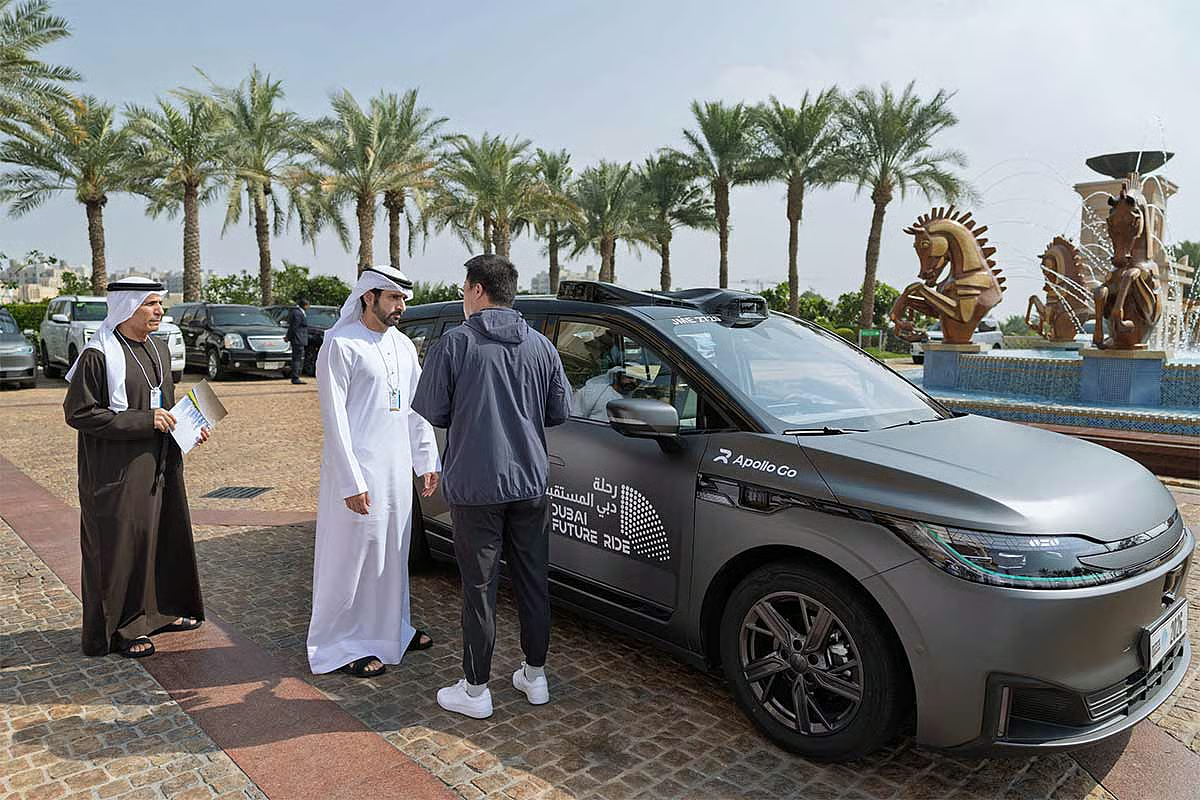
Sheikh Hamdan bin Mohammed bin Rashid Al Maktoum launched official operations of fully driverless RT6 robotaxis developed by Baidu, marking a new phase in Dubai’s smart mobility push. He rode in an autonomous vehicle to the World Governments Summit at Madinat Jumeirah, signaling confidence in the technology and the regulatory framework. Public rollout is slated for the first quarter of 2026, according to local announcements.
Why this matters now
Dubai is moving from pilots to live operations on roads open to traffic. The launch aligns with the emirate’s plan to cut congestion and raise safety through automation. It also positions Dubai as a neutral testbed for global AV firms seeking scale outside East Asia and the United States. The timing, during WGS 2026, underscores policy support and fast execution.
Dubai autonomous RT6 taxis: what’s under the hood
The sixth-generation RT6 is built for large-scale robotaxi deployment. It uses a sensor suite combining LiDAR, radar, and cameras to achieve 360-degree perception, with on-board AI making real-time driving decisions. LiDAR is a laser-based ranging system that builds a detailed 3D map of surroundings; AI refers to software that performs tasks like prediction and planning. While specifications vary by batch, Apollo Go highlights a dense sensor stack for urban environments.
Data, miles, and safety record
Globally, Apollo Go reports over 240 million autonomous kilometres and more than 10 million robotaxi rides, forming the operational base for Dubai. These metrics indicate sustained testing, incident learning, and software iteration across multiple cities.
From MoU to driverless rides in months
The service stems from collaboration between Roads and Transport Authority (RTA) and Apollo Go that intensified after WGS 2025. Authorities issued permits enabling fully driverless trials on designated public roads, accelerating the path to commercialization in early 2026. The compressed timeline reflects regulatory readiness and existing digital infrastructure.
New control centre at Dubai Science Park
Apollo Go opened its first operations and control centre outside China at Dubai Science Park. The 2,000-square-metre site hosts a command room, simulation and training suites, and maintenance facilities. It handles fleet monitoring, software updates, inspections, and safety testing to keep vehicles mission-ready.
What comes next
Dubai plans a phased public rollout in Q1 2026 and intends to scale the fleet in the coming years, supported by a broader smart-mobility agenda. The emirate has identified priority zones and routes while building a governance model for autonomous operations. The stated ambition is to reach a four-digit fleet as the service matures.
The debut of fully autonomous RT6 taxis ties technology to daily mobility. It showcases fast coordination between policymakers, regulators, and industry. With live operations, a local control centre, and a clear road map to scale, Dubai signals that driverless transport is moving from showcase to service